The Machine Clicks
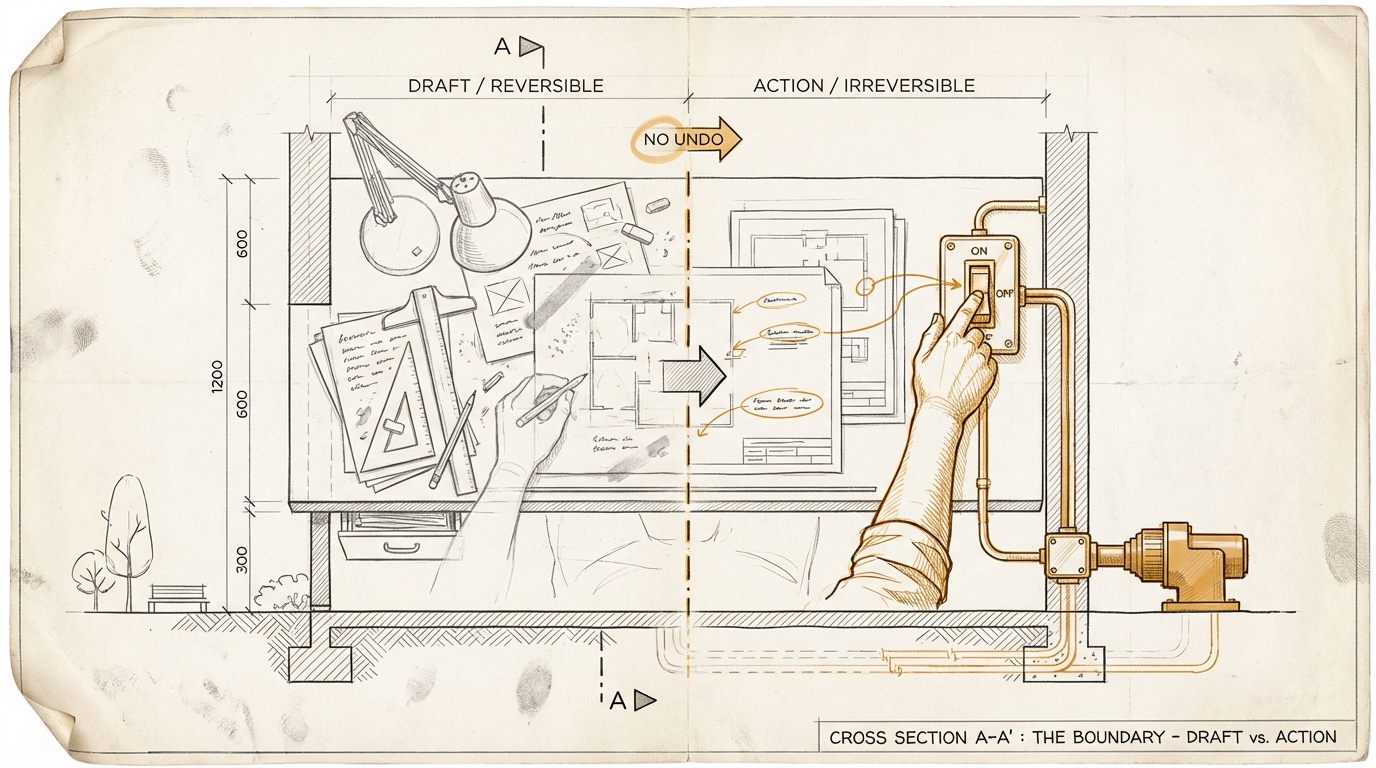
Anthropic has given Claude "Computer Use". Research preview, Mac only, for Pro and Max subscribers. Claude can now open files, navigate websites, work in IDEs, create pull requests, run tests. Not through APIs. Through the interface. The machine moves the cursor, clicks buttons, scrolls through pages.
Anthropic calls this a "permission-first approach." Claude asks before opening a new application. The user can stop it at any time.
Stay up to date
Get notified when I publish something new, and unsubscribe at any time.
In the same breath: "Claude can make mistakes." The safety mechanisms are "still under development." And screen-based operations are significantly slower than direct API integrations.
This caught my attention not because it is technically surprising. Computer Use has been available as a beta since October 2024. It caught my attention because of the shift behind it.
Until now, AI has produced text. Artifacts. Drafts, code, analyses. If the output was wrong, you discarded it. New prompt, new attempt. The error was cheap. A bad draft costs nothing except time.
Computer Use changes that. When the machine does not write but acts, when it clicks buttons, moves files, submits forms, then an error has consequences beyond the output. A wrong email has been sent. A file has been overwritten. A form has been submitted. "Undo" does not work equally well for every action.
The spec question we have asked in earlier texts, "Do you have the language to say what you need?", carries a different weight here. For a text artifact, a vague spec is annoying. For a physical action on your system, a vague spec is a risk. The difference between "write me a draft" and "send this email" is not gradual. It is categorical.
Benedict Evans wrote in the same week that enterprise adoption of AI "almost never works" as a grassroots movement. Companies need guided implementations, not raw tools. OpenAI and Anthropic are responding by partnering with consultancies and private equity firms.
Anthropic's answer to the governance question in Computer Use is a permission dialog. Technically clean. Organizationally incomplete. Because the question inside a company is not "May Claude open Safari?" The question is: who defines which actions the machine may perform? In what context? With what review? And who is accountable when the machine does something nobody meant that way?
I do not have a good answer yet. But the question will become relevant faster than most governance frameworks can keep up: if AI no longer produces text but performs actions, where exactly is the difference between a tool and an actor?
Ask yourself or your AI: Which actions in your company are reversible, and which are not? And how does your risk assessment change when the irreversible step is taken not by a human, but by a machine?