Not Siri-ready. System-ready.
The obvious reading of Apple’s current situation is this: Siri still is not getting there, so the whole topic can be ignored for now. John Gruber sharpened that line forcefully in March 2025. His point was not only that Apple was late. His point was that Apple presented things as near-term reality that apparently did not even exist in a credible demo-ready form.
That matters. But for companies, another question matters more.
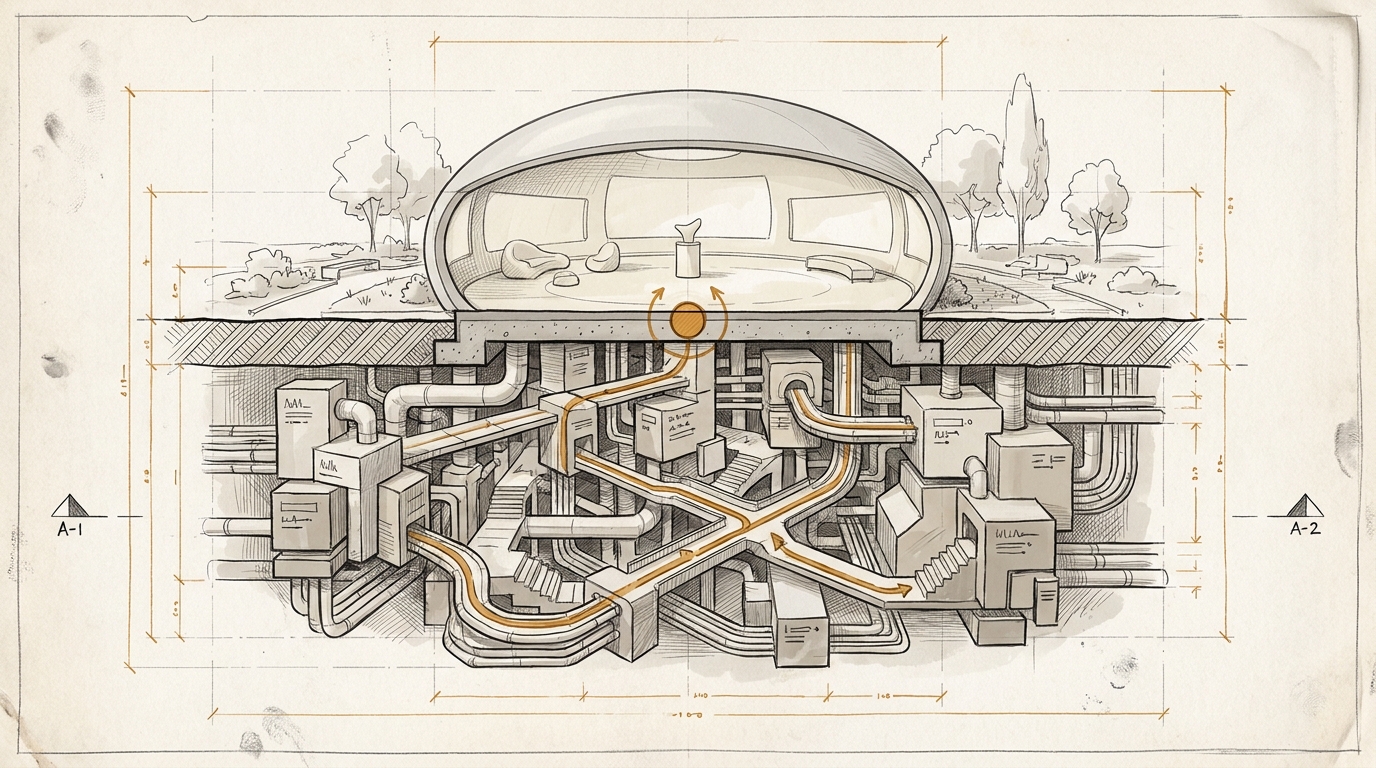
Because even if Apple once again fails to show a convincing Siri comeback at the next WWDC, the deeper movement still continues. It does not run only through Siri as a product. It runs through the layer underneath it: App Intents, Spotlight, Shortcuts, Visual Intelligence, and all the system surfaces through which an app becomes addressable to the operating system.
That is where the debate quickly becomes too small. Many teams are effectively asking: do we need to prepare our app for Siri? That sounds reasonable. But it is the wrong altitude. It turns the issue into a bet on one assistant. And right now, that specific bet looks visibly uncertain at Apple.
Stay up to date
Get notified when I publish something new, and unsubscribe at any time.
The more robust question is: is our app prepared for a world in which systems can find, understand, and trigger our functions?
Apple itself is signaling that direction quite clearly. In the developer documentation and WWDC sessions, App Intents no longer appear merely as a Siri feature. The framework now connects to Shortcuts, Spotlight, widgets, controls, and by now also to Apple Intelligence and Visual Intelligence. Put differently: Siri is not the real lever here. The real lever is the systemically described capability.
That is more than a developer detail. It changes the management question.
Until now, a certain degree of digital visibility was often enough. A good website. A good app. Clear navigation. Some SEO, and later perhaps some LLM visibility. That will get harder. It will no longer be enough that humans can click through menus. The system itself will need to recognize which function exists at all, which objects belong to it, which states are relevant, and which action may safely be triggered.
That is why I would currently not advise companies to get ready for a better Siri. I would advise them to become system-ready.
That sounds smaller, but it is strategically more precise. It decouples the work from Apple’s product problems. Maybe Siri gets good. Maybe it still takes time. Maybe the visible interface shifts again. But if the capability layer underneath becomes more stable, the preparatory work is still worth it. Then this is no longer about one assistant use case. It becomes a question of machine-readable functions, clean entities, clear states, and addressable actions.
That is exactly why Apple’s situation is both sobering and useful. Sobering, because product promises of this kind should not be trusted blindly right now. Useful, because the platform movement underneath is still visible.
So the wrong question is: when will Siri finally be good enough?
The better question is: which parts of your digital offering are already described in a way that lets a system work with them meaningfully, and which parts still exist only as an interface for humans with eyes, a mouse, and patience?
Ask yourself, or ask your AI: Which functions in your app are truly systemically addressable today, and which are merely navigable?