The Model Company Is Not Yet a Model Organization
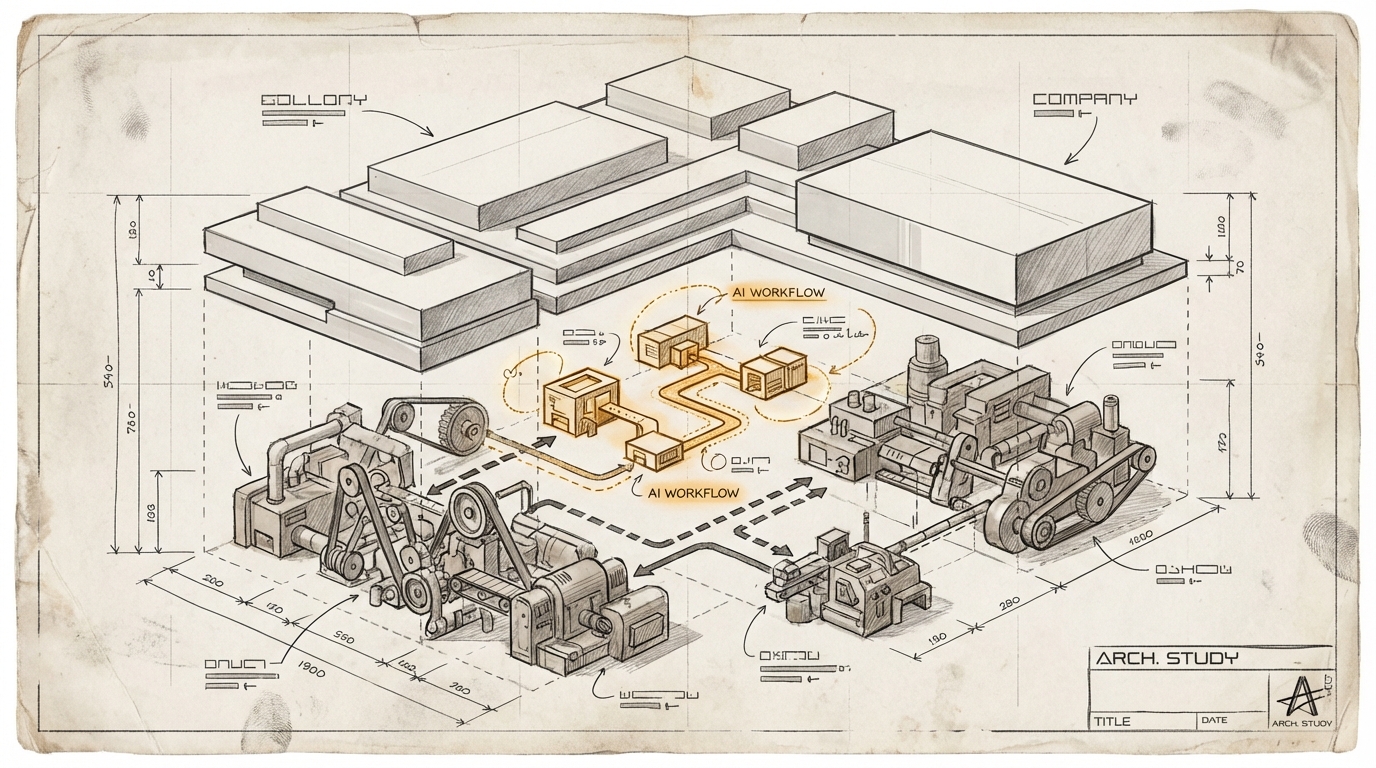
Steve Yegge posted a line that first reads like cheap provocation and then sticks. After a conversation with a longtime Google director, he wrote that Google's AI adoption footprint was roughly on the level of John Deere.
That sounds absurd. This is the same company whose CEO said not long before that well over 30 percent of the code checked into Google is now created with AI. The same company publicly showing an agentic coding workflow with Jules. The same company building Gemini.
And still, the line could be true in substance.
Not because Google is weak at AI. But because there is a large difference between model capability and organizational capability.
Stay up to date
Get notified when I publish something new, and unsubscribe at any time.
A company can build the best models in the world and still function internally very much like an old company. Then the AI capability sits in a few product teams, research units, and tool groups. But not in the operational muscle of the organization. Not in approvals, prioritization, review culture, middle management, budget logic, and the everyday loops where work actually happens.
That is exactly why the new AI numbers from large companies should be read carefully. "30 percent of the code" sounds like deep transformation. But it can also mean that one specific part of the development process is already heavily penetrated by AI while the rest of the organization still runs on the old rhythm. The capability is there. The diffusion is not.
William Gibson has the better shorthand for this pattern:
"The future is already here. It's just not very evenly distributed."
That would not be a special Google case. More likely the default pattern of the next few years.
Almost all large companies will want to be judged by whether they deploy frontier models, roll out coding assistants, or build internal agents. Much less visible is the other question: has the company itself already become an organization that works differently around those tools?
That is where the real line sits. Not between "has AI" and "does not have AI." But between companies that add an AI layer on top of the old operating model and companies whose operating model is actually being rebuilt through AI.
From the dekodiert perspective, this is a terrain signal. Competition is not only shifting onto the level of models. It is shifting onto the level of organizational digestibility. Who can translate the new capability into processes, roles, decision chains, and habits? Who is not just building models, but a model organization?
Maybe that is the more uncomfortable truth behind all the AI announcements: the model company is still a long way from being the model organization.
Ask yourself, or ask your AI: Where in your company is there already visible AI capability without the underlying organization of work having changed?
Sources
- Steve Yegge on X: post from 2026-07-11 on AI adoption at Google (indirect account of a conversation)
- Alphabet Q1 2025 Earnings Transcript: Sundar Pichai on more than 30% AI-generated code at Google (2025-04-24)
- Google Blog: Jules, Google's autonomous AI coding agent (2025-05-20)
- Quote Investigator: Quote Origin: The Future Has Arrived — It’s Just Not Evenly Distributed Yet (updated 2025-03-01)